
How to actually read your wearable: an honest guide to the metrics
Your wearable is a useful awareness tool, not a medical device: trust it for trends in your resting heart rate, heart rate variability and total sleep, treat its sleep stage breakdown as a rough estimate, and never use it to diagnose yourself, see a doctor for anything that needs diagnosing.
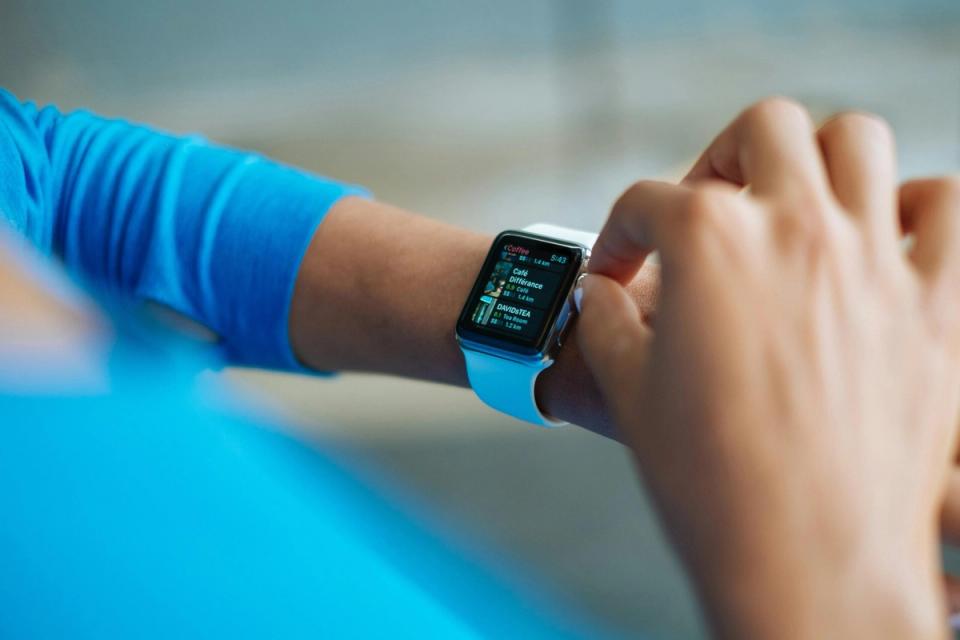
You wear it every day, glance at the step count and the sleep score, and move on. Underneath, your watch or ring is logging a lot of useful physiology, if you know which numbers to trust and which to take with a pinch of salt. Here is an honest guide to the metrics that actually matter, what each one is good for, and where the device is guessing.
First, how much to trust the numbers
Set your expectations before you read a single metric. Consumer wearables are good at total sleep time and at tracking your own heart trends over time, but they are far less reliable at breaking sleep into stages: in independent testing of eleven consumer trackers, agreement with a proper sleep lab on the individual stages varied widely between devices and was moderate at best[1]. So treat your deep and REM percentages as estimates and a trend, not gospel, and judge any metric against your own baseline rather than someone else’s.
Moderate at best
Heart rate variability: the recovery signal
Heart rate variability (HRV) is the small variation in time between your heartbeats, and more of it at rest generally means your nervous system is balanced and recovered, while a drop suggests you are still handling stress, load, or the start of an illness. It is one of the more useful things a wearable tracks. Do not chase the raw number, which varies a lot by age and person; watch your own trend, and use it as a nudge: near or above your baseline is a green light to train hard, well below it is a sign to ease off. Alcohol is a reliable HRV killer, so the morning after even a couple of drinks usually shows a clear drop.
Resting heart rate: the efficiency gauge
Your resting heart rate, measured overnight or just before you rise, tends to fall as your fitness improves, since a stronger heart pumps more per beat. The useful signals are the trend (drifting down over weeks means your training is working) and the sudden jump: waking several beats above your normal often means illness coming on, dehydration, a late meal or alcohol, or accumulated fatigue. If your resting heart rate is up and your HRV is down on the same morning, take it as a cue to back off.
Respiratory rate: the stable one
Your overnight breathing rate is normally very steady, so a deviation means something. A rise of a couple of breaths a minute above your usual can be an early sign your body is fighting an infection, sometimes before you feel symptoms.
Blood oxygen and sleep apnea: where the watch stops and the doctor starts
This is the metric to be careful with. A wearable may flag low or dipping overnight blood oxygen (SpO2), and some 2026 watches can now screen for breathing disturbances, but no consumer device can diagnose sleep apnea; that needs a home sleep test or an in lab study[2]. So treat a flag as a reason to talk to a doctor, not a verdict. If you snore loudly, gasp or stop breathing in your sleep, or you are exhausted during the day despite enough hours, that is worth a proper assessment, because untreated apnea genuinely harms health and recovery.
Sleep stages and the aggregate scores
Deep sleep is when much of your physical repair happens, and REM supports memory, mood and learning; broadly, adults spend roughly the high teens percent in deep sleep and about 20 to 25 percent in REM, weighted to the second half of the night[3]. Useful to know, but remember the accuracy caveat above. The same goes for the headline readiness, recovery or body battery scores: they are a handy at a glance blend of your metrics, but they are proprietary and not validated as performance predictors, so use them as a guide and let how you feel have a vote. Our companion piece on readiness scores goes deeper on that.
A one minute morning habit
- Before the phone notifications, glance at your HRV and resting heart rate against your baseline, and your total sleep.
- All near normal? Train as planned. Both pointing the wrong way and you feel off? Swap the hard session for easy aerobic or technique work.
- Run small experiments on your own routine: dinner earlier, a cooler darker room, screens off sooner, and watch what your own numbers do. The point is to learn your biology, not to hit a perfect score.
The number you can most improve is built in your bedroom
Sleep is the input behind almost every metric on your wrist, and it is built in your bedroom: cool, dark, quiet, and a supportive bed your body can settle into. For the wider setup, see our guides on what counts as a good night’s sleep, on reading your readiness score, and on the right bedroom temperature, and browse the Dreamland mattress range or find your nearest stockist.
Good to know
- Can my watch diagnose sleep apnea?
- No. It can flag patterns worth checking, and some 2026 watches can screen, but a diagnosis needs a proper sleep test, at home or in a clinic. See a doctor if you snore loudly, gasp, or are sleepy by day.
- How accurate is the deep and REM sleep data?
- Treat it as an estimate. Wearables are good at total sleep time but only roughly accurate at splitting it into stages, so watch the trend, not a single night.
- Which metric is most useful?
- For most people, the trends in resting heart rate and HRV against your own baseline, plus total sleep. They are the most reliable and the most actionable.
- Should a low recovery score stop me training?
- Take it as a guide, not an order. If you feel good, train and adjust by feel; if you feel wrecked, respect that even on a high score.
References
- [1] Accuracy of 11 Wearable, Nearable, and Airable Consumer Sleep Trackers: Prospective Multicenter Validation Study, Peer-reviewed validation study (e.g. PMC10654909, 2023) Wearables track total sleep time reasonably well, but across 11 consumer trackers their agreement with a sleep lab on sleep stages varied widely and was moderate at best; treat deep and REM percentages as a rough trend.
- [2] Consumer wearables and sleep apnea: screening vs diagnosis (2026 device clearances), Sleep Foundation / AASM Consumer devices cannot diagnose sleep apnea; a home or in-lab sleep test is required; some 2026 devices can screen.
- [3] Stages of Sleep, Sleep Foundation Deep sleep is physically restorative and dominant early; REM (~20 to 25 percent) supports memory and is weighted to the second half.
Researched and drafted with AI assistance, reviewed and fact checked by a named human.