
Is your bedroom too cold for good sleep? An NZ winter guide
In New Zealand the practical target for a healthy, sleep friendly bedroom is around 18 degrees Celsius, the World Health Organization minimum, yet the average Kiwi bedroom sits near 14 degrees in winter, cold enough to fragment your sleep and leave you stiff in the morning.
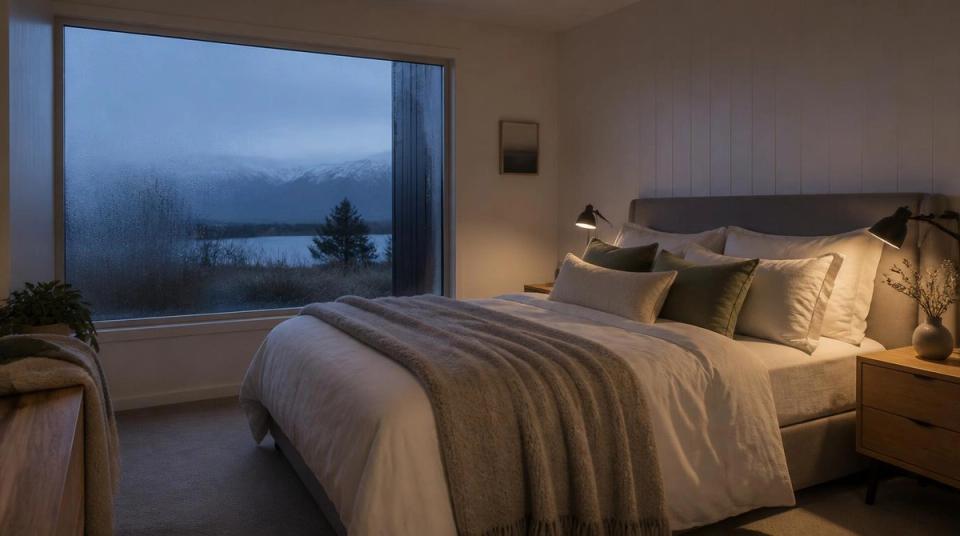
Most of us treat winter sleep problems as just part of the season: cold sheets, heavy blankets, stiff mornings, waking up tired. You blame a busy week or a hard session. For a lot of New Zealand homes the real reason is simpler, and fixable. The room is too cold, too damp, or both. Training is one hour; the other twenty three are where recovery is won, and in winter those hours start with the room you sleep in.
What temperature should a bedroom actually be?
As the evening comes, your core body temperature naturally falls, and that drop is part of the signal that tells your brain it is time to sleep, which is why a slightly cool room beats a hot, stuffy one[5]. But there is a difference between cool and cold. Too warm and you cannot shed heat, so you toss and sweat. Too cold and your sleep turns lighter and more broken. The sweet spot for most people sits around 18 degrees: the World Health Organization names 18 degrees as the minimum healthy indoor temperature for cold seasons, and 20 degrees where there are young children, older people, or anyone unwell[1].
The New Zealand problem: our bedrooms are colder than we think
Here is the uncomfortable part. New Zealand bedrooms routinely fall well below that healthy minimum. Research on Kiwi homes puts the average winter bedroom near 14 degrees, and in one nationwide measurement 84 percent of bedrooms overnight were below the WHO minimum of 18 degrees[2]. Many homes are older, hard to heat, and under insulated, so the bedroom cools fast once the sun goes down.
84%
Damp makes it worse. Moisture in the air makes a cool room feel colder than the thermometer reads, leaves bedding clammy, and feeds the dust mites and allergens that disturb sleep. New Zealand’s Healthy Homes Standards now require rental living rooms to have heating that can reach at least 18 degrees, a useful benchmark for any home, owned or rented[3].
Why cold, broken sleep costs you recovery
Deep sleep is when your body does much of its repair: muscles recover, tissue mends, the immune system is supported, and the nervous system resets. When the room is too cold your body keeps interrupting that work, and although you may not fully wake, your sleep becomes more fragmented. That is why winter mornings can feel heavy, with a stiff back and slower joints, even after eight hours in bed.
The counterintuitive fix: warm your feet to sleep cool
To fall asleep your core needs to cool, but warming your hands and feet is one of the best ways to make that happen. When the blood vessels in your feet open up, they carry heat away from your core, your core temperature drops faster, and your brain gets a clearer signal to sleep. In a landmark Nature study, the degree of that foot warming was the single best predictor of how quickly people fell asleep[4]. In a cold New Zealand bedroom, a pair of breathable wool or cotton bed socks is a genuinely evidence based trick, not an old wives tale.
The warm shower trick, and the timing that matters
A warm shower or bath before bed works the same way: it brings blood to the surface of your skin, and afterwards your body sheds heat and your core temperature falls. A systematic review of the research found that passive body heating with warm water, scheduled about one to two hours before bed, measurably shortened the time people took to fall asleep and improved their sleep quality[6]. The timing is the catch: right before bed is too soon. Aim for about 60 to 90 minutes before you turn the light off.
Heat the bed, not the whole room
Heating an entire bedroom all night is expensive and can leave it stuffy. A smarter approach warms the space around your body.
- Warm the bed before you get in. Icy sheets make your body tense before sleep even starts; an electric blanket or a hot water bottle removes that cold shock. If you use an electric blanket, warm the bed first and follow the safety instructions; many people prefer to switch it off before sleeping so they do not overheat.
- Layer with breathable materials. Wool and cotton trap warmth while letting moisture escape; heavy synthetics can feel warm at first then leave you clammy. A good winter bed feels warm, dry and breathable, not hot, damp or airless.
When the mattress is part of the problem
Cold makes your body curl up and tense, which is normal. But if your mattress is sagging, too firm, too soft, or no longer supporting you, that winter tension gets worse: your hips dip, your shoulders carry pressure, your lower back stays under strain, and you shift all night looking for a comfortable position. This is the "I slept eight hours and still woke up sore" feeling. A supportive mattress lets your body relax instead of working, keeping the spine better aligned and easing pressure points.
Your winter sleep checklist
- Put a cheap thermometer in the bedroom and aim for around 18 degrees where practical.
- Cut the damp: ventilate, let sunlight in, wipe window condensation in the morning, and use a dehumidifier where needed.
- Warm your feet with breathable wool or cotton socks.
- Take a warm shower about 60 to 90 minutes before bed.
- Warm the bed before you get in, then layer with wool and cotton.
- Never go to bed in damp clothing or with damp bedding.
- Check whether your mattress still supports your back, hips and shoulders.
Room problem or mattress problem?
A simple way to tell them apart. If you feel cold the moment you walk into the room, or you wake to pull the blanket tighter, the room is part of the problem. If the sheets feel damp or clammy, the bedding environment needs attention. If you wake with the same sore spot every morning, or you sleep better in a hotel or another house, the mattress is the more likely culprit. If winter clearly worsens existing back pain, the cold is probably adding muscle tension on top of a support issue, so it is worth addressing both.
If you are waking stiff, sore or tired through winter and the mattress is part of the story, it is worth feeling a more supportive setup in person. Browse the Dreamland mattress range or find your nearest stockist and try it for yourself.
Good to know
- What is the best bedroom temperature for sleep in New Zealand?
- Around 18 degrees where possible. That is the WHO minimum healthy indoor temperature and it sits in the cool range that helps your body fall and stay asleep, without being so cold that your body keeps working to stay warm.
- Should I heat the whole room or just warm the bed?
- For many homes it is more practical to warm the bed before sleep, cut the damp, block draughts and use breathable layers, while keeping the room comfortable. The bed is where your body needs the most warmth and support.
- Why do I wake up stiff in winter?
- Cold air tightens muscles, and if the mattress is not supporting you well that tension becomes morning stiffness. It may be the cold room, the mattress, or both. Persistent pain is worth checking with a professional.
- Can a damp bedroom affect sleep?
- Yes. Damp air makes a room feel colder, leaves bedding clammy, and feeds dust mites and allergens. Reducing damp can make a bedroom feel warmer before you even raise the temperature.
References
- [1] WHO Housing and health guidelines (low indoor temperatures), World Health Organization, 2018 WHO: 18C is the minimum healthy indoor temperature in cold seasons; 20C with young children, older people or anyone unwell.
- [2] Indoor environment and health: New Zealand bedroom temperatures, Environmental Health Intelligence NZ (EHINZ); University of Otago / He Kainga Oranga Average NZ winter bedroom about 14C; 84 percent of bedrooms measured overnight were below 18C.
- [3] Healthy Homes Standards: heating standard, Tenancy Services New Zealand Healthy Homes Standards require rental homes to have fixed living room heating able to reach at least 18C.
- [4] Warm feet promote the rapid onset of sleep, Nature, 1999 Warm feet at bedtime were the single best physiological predictor of how quickly people fell asleep.
- [5] The best temperature for sleep, Sleep Foundation Core body temperature falls during sleep, so a cool room helps you fall and stay asleep.
- [6] Before-bedtime passive body heating by warm shower or bath to improve sleep: a systematic review and meta-analysis, Sleep Medicine Reviews, 2019 A warm shower or bath 1 to 2 hours before bed shortens sleep onset and improves sleep quality.
Researched and drafted with AI assistance, reviewed and fact checked by a named human.