
Screens and sleep: how to scroll without ruining your rest
Screens hurt your sleep less through "blue light" than through what you do on them and how late they keep you up: stimulating or stressful content and a pushed back bedtime matter more than the wavelength, so the fixes are mostly about behaviour, not gadgets.
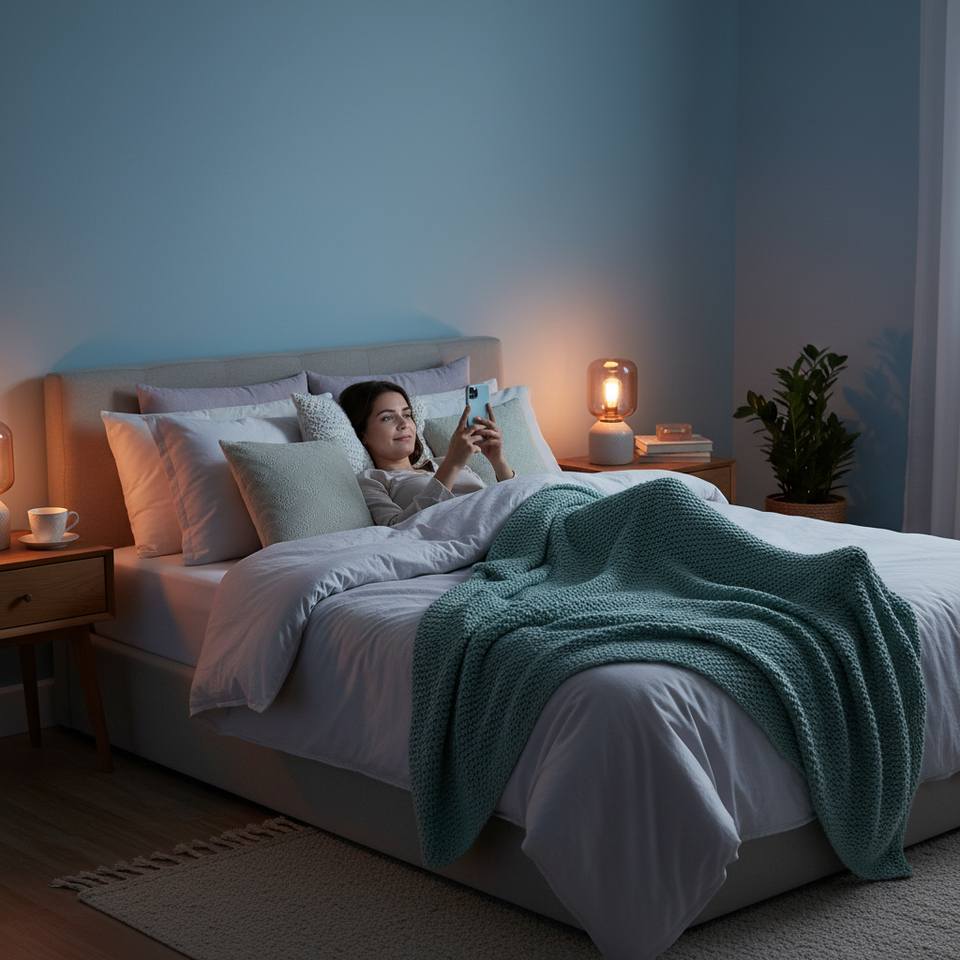
It is the modern bedtime ritual: pyjamas on, teeth brushed, phone in hand. You mean to send one last message, and half an hour later you are deep in a feed or reading stressful headlines. The usual advice is to banish the phone from the bedroom, but for a lot of Kiwis that phone is the alarm, the link to family, and the way they wind down. The good news is that screens and sleep do not have to be enemies. Once you know how screens actually affect your sleep, you can stay connected and still protect your rest.
Is blue light really the villain?
Less than we were told, at least for adults. The mechanism is real: light at night, and blue light in particular, suppresses melatonin (the hormone that signals sleep) and can nudge your body clock later, with Harvard researchers finding blue light held melatonin down about twice as long as green light and shifted the rhythm by up to three hours[1]. But the practical picture is more nuanced than the headlines. A 2024 National Sleep Foundation expert panel concluded that screen use harms young people’s sleep mainly because of content, and reached no consensus that blue light from screens meaningfully impairs adult sleep[2]. And blue light blocking glasses, the obvious fix, came out inconclusive in a 2023 Cochrane review[3]. So warming your screen helps a little, but it is not the main game.
What actually keeps you awake
Three things do more damage than the colour of the light.
- Time displacement. The simplest and biggest one: scrolling just pushes your bedtime later, and that lost hour is sleep you do not get back. Screen use delays sleep onset by roughly 20 to 40 minutes on average[2].
- Arousal. Stressful or stimulating content, doomscrolling the news, a heated comment thread, a fast game, raises your alertness and tips you toward fight or flight right when you are trying to wind down. The device can be identical; a calming show and an angry feed leave your body in completely different states.
- Bright light, late. A bright screen in a dark room is jarring and reinforces the "it is still daytime" signal, where a dimmed, warmer screen is gentler[1].
Three realistic rules
You do not need to throw your phone out the window. You need better boundaries.
- Curate the content. If you are on a screen near bed, choose calm input: a familiar comedy rerun, an audiobook, a meditation app. Skip the news, work email, and anything designed to wind you up.
- Use the tech against itself. Schedule Night Shift or your phone’s equivalent to warm the screen after sunset, and turn the brightness right down; your eyes adjust quickly in a dark room. It is a small help, not a cure, so pair it with the other two rules.
- Keep a buffer. Even 20 to 30 screen free minutes before sleep gives your brain a clear signal that the day is done. Use it for a skincare routine, a chat with your partner, or a few pages of a physical book.
Make the bedroom the easy choice
Technology is a tool, and a calm, comfortable bedroom makes the healthy choice the easy one. A cool, dark, quiet room and a supportive mattress that lets your body settle do more for your sleep than any screen setting. For the rest of the setup, see our guides on the right winter bedroom temperature and on what actually counts as a good night’s sleep, and browse the range or find your nearest stockist.
Good to know
- Does blue light from my phone really ruin my sleep?
- It suppresses melatonin and can shift your body clock, but for adults the evidence is mixed, and what you watch and how late you stay up matter more than the blue light itself.
- Do blue light blocking glasses help?
- The evidence is inconclusive. They are not a reliable fix; a buffer before bed and calmer content do more.
- What is the single best change I can make?
- Stop the scroll from pushing your bedtime later. Even a 20 to 30 minute screen free buffer protects real sleep.
References
- [1] Blue light has a dark side, Harvard Health Publishing Blue light suppresses melatonin (about twice as long as green) and can shift the body clock by up to about three hours.
- [2] Screen use and sleep: 2024 expert consensus, National Sleep Foundation 2024 NSF panel: screen harm to youth is mainly content; no consensus that blue light meaningfully impairs adult sleep; onset delayed ~20 to 40 minutes.
- [3] Blue-light filtering spectacle lenses for visual performance, sleep, and macular health, Cochrane Database of Systematic Reviews, 2023 Cochrane 2023: evidence for blue light blocking glasses improving sleep is inconclusive.
Researched and drafted with AI assistance, reviewed and fact checked by a named human.