
How to beat jet lag, an honest traveller’s guide
Jet lag is your body clock stuck on home time, and the most powerful fix is not a supplement but light: get bright light in the morning after flying east and in the evening after flying west, shift your routine before you go, and give yourself a couple of patient days at the other end.
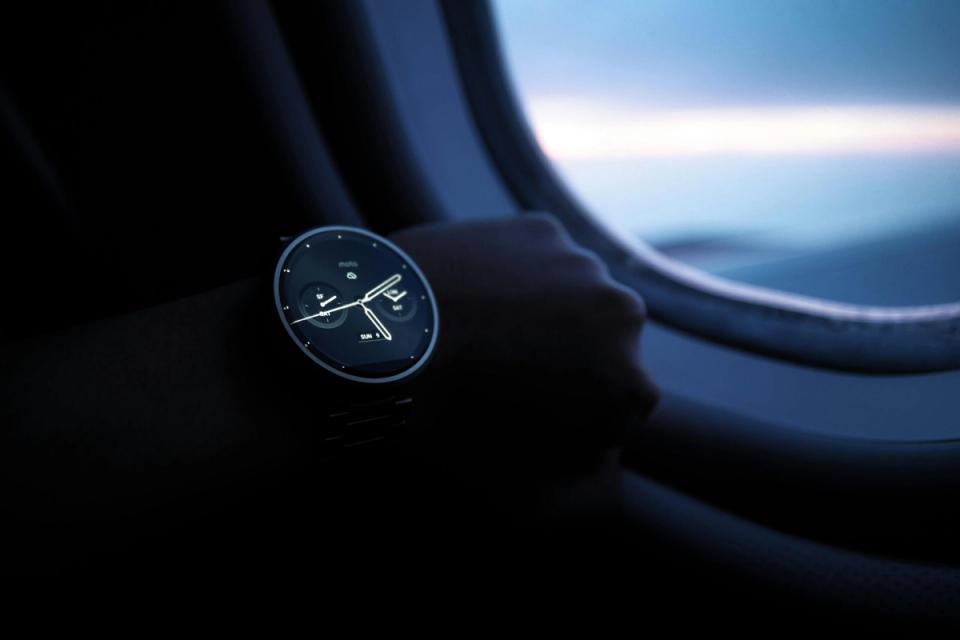
You have booked the flight and packed your gear, ready to train or compete somewhere new. The one opponent you cannot out train is your own biology. Crossing several time zones does more than make you tired; it disconnects your internal clock from the world outside, so your body wants to sleep when it is time to perform and wants to perform when it is time to sleep. The good news is that this is one of the most controllable parts of travel, and the best tools are free.
What jet lag actually is
Jet lag is not just tiredness; it is a short term circadian disorder, your body clock pointing at the wrong time. That clock normally anticipates sunrise and sunset to time your hormones, digestion, body temperature and alertness, so when you jump several hours it all fires at the wrong moment: you feel wired at 2 am and flat at midday, your gut is confused by meals at "biological night," and your sleep takes a hit[1]. A rough rule is that your body shifts only about one time zone a day on its own, which is why a long trip can leave you off for days unless you help it along.
Light is the real tool, and direction decides how you use it
Light is by far the most powerful signal for resetting your clock, and the rule depends on which way you flew[1].
- Flying east (for example Auckland to Los Angeles or Asia): you need to pull your clock earlier. Seek bright light in the morning at your destination and avoid bright light in the late evening.
- Flying west (for example Auckland to London): you need to push your clock later. Seek light in the late afternoon and early evening, and go easy on bright light first thing in the morning.
1 zone/day
Source: Interventions to Minimize Jet Lag After Westward and Eastward Flight, Frontiers in Physiology, 2019
Before you fly
- Shift your schedule. For three to four days before an eastward trip, move your bed and wake times about 30 to 60 minutes earlier each day; for a westward trip, move them later. Even a partial shift means less to make up on arrival[1].
- Arrive rested, not wrecked. Bank a little extra time in bed in the week before you travel. A rested body handles the stress of travel better than a sleep deprived one.
In the air
- Set your watch to the destination time as you sit down, and start living in it: stay awake if it is daytime there, try to sleep (eye mask, earplugs) if it is night.
- Eat light. Heavy meals sit badly when your digestion is already out of sync; lighter food, timed to the destination, is kinder.
- Hydrate, and go easy on alcohol and caffeine. Cabins are very dry, and dehydration makes everything feel worse.
On the ground
- Use light deliberately, per the direction rule above, and get outside for it where you can.
- Move gently. A light walk or easy session helps reset the clocks in your muscles, but keep it low key on day one, when your coordination is still off.
- Nap with discipline. If you are flattened during the day, a nap of up to 20 minutes can help; set an alarm, because going longer risks deep sleep and leaves you groggier, and eats into your night’s sleep.
- Build a sleep cave. Dark (eye mask or clip the curtains, since even a sliver of light disturbs sleep), cool (around 18 to 20 degrees), and quiet (earplugs or a white noise app against unfamiliar city sounds).
What about melatonin and supplements?
Light and routine do most of the work; supplements are minor tools at best, and this is where the old travel advice goes wrong. Melatonin has reasonable evidence for jet lag, and in New Zealand the rules changed in 2025: short term melatonin for jet lag is now available to adults through a pharmacy, while it stays prescription only for under 18s[2]. So the honest advice is simple: ask your pharmacist or GP whether melatonin suits you and how to time it, rather than guessing a dose. As for the longer list of powders and capsules sometimes sold as a "jet lag stack," skip the self assembled protocol and talk to a professional; there is no need to dose yourself to chase a flight.
Be patient with your performance
Do not expect a personal best on day one; your body is spending its energy on realignment, not peak output. Give yourself two to three days of lighter training, focused on mobility, technique and easy aerobic work, and ramp up once you are sleeping and feeling closer to normal. If you track your sleep, expect the numbers to dip for a day or two; treat that as a trend to ride out, not a verdict.
The bedroom you control is the one at home
You cannot choose your hotel mattress, but you can make your own bed the place your body resets fastest between trips: cool, dark, quiet, and genuinely supportive. For the home setup, see our guides on what counts as a good night’s sleep and on the right bedroom temperature, and browse the Dreamland mattress range or find your nearest stockist.
Good to know
- Is jet lag worse flying east or west?
- Usually east, because you have to advance your clock, which is harder than delaying it. Morning light at your destination helps after an eastward trip; evening light helps after a westward one.
- What is the single best thing for jet lag?
- Strategic light. It is the most powerful tool for resetting your clock, and it costs nothing.
- Should I take melatonin for jet lag?
- It can help some people, and in New Zealand adults can now get short term melatonin for jet lag from a pharmacy (it stays prescription only for under 18s). Ask your pharmacist or GP about whether and how to use it.
- How long does jet lag last?
- Roughly a day per time zone crossed if you do nothing, and often less if you use light and schedule shifts well.
References
- [1] Interventions to Minimize Jet Lag After Westward and Eastward Flight, Frontiers in Physiology, 2019 Timed light is the most powerful tool to shift the clock; east needs morning light, west needs evening light; shift schedule before travel; unaided ~1 zone/day.
- [2] Melatonin classification in New Zealand (2025 reclassification), Healthify NZ and Medsafe From 2025, short term melatonin for jet lag is available to NZ adults via a pharmacy; prescription only for under 18s.
Researched and drafted with AI assistance, reviewed and fact checked by a named human.